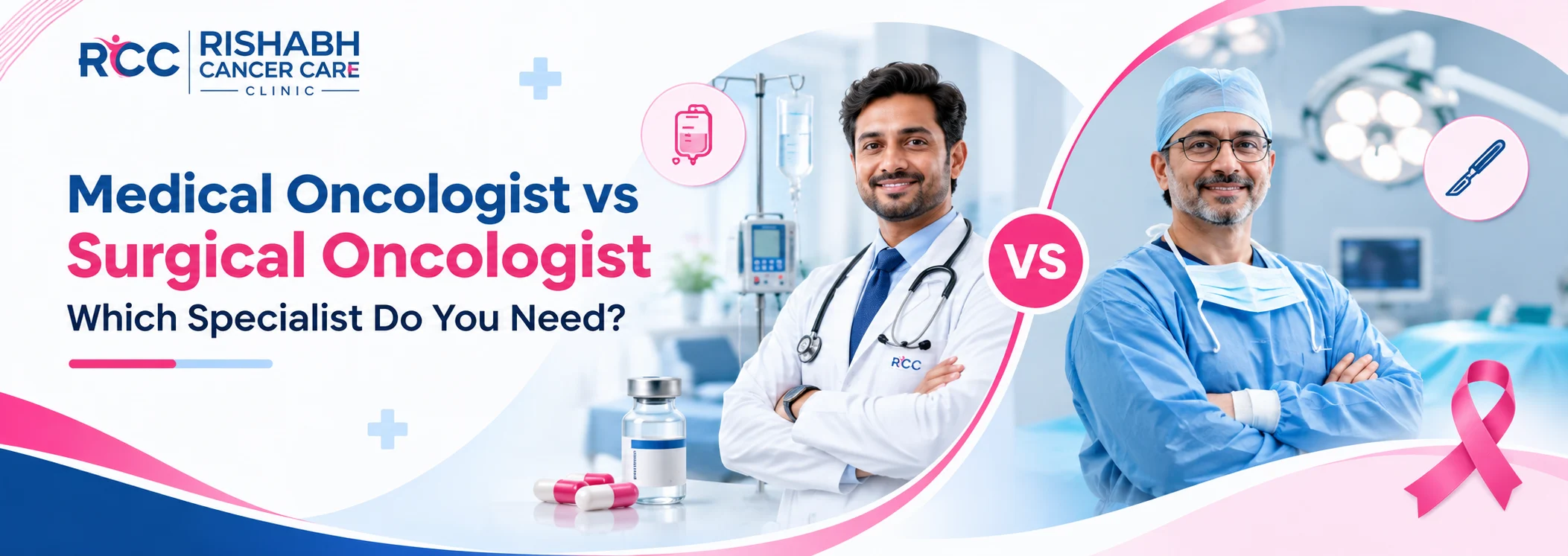
Should you see a medical oncologist or a surgical oncologist first after a cancer diagnosis? Medical oncologists oversee medicine-based cancer treatments, whereas surgical oncologists assess and perform cancer-related operations. Many patients end up needing a coordinated team of both. Which one you meet first depends on whether cancer is suspected or confirmed, where it is in the body, its stage, your biopsy report and the treatment plan being discussed.
Understanding the medical oncologist vs surgical oncologist question early can make appointments far less confusing for you and your family. This blog explains what each specialist does, how they differ, who to see first, how treatment order is decided and how to choose a team you can trust.
What Does a Medical Oncologist Do?
A medical oncologist is a cancer doctor who treats cancer with medicines and coordinates your overall treatment plan. They decide which drug-based options suit your cancer type and stage, and they monitor how your body responds. If you prefer to meet someone locally, a medical oncologist in Jaipur can review your reports in person.
Treatments a Medical Oncologist Manages
Medical oncologists work with several types of systemic treatment, meaning medicines that travel through the body. These include:
-
Chemotherapy, which uses drugs to destroy or slow fast-growing cancer cells.
-
Immunotherapy, which helps the immune system recognise and respond to cancer.
-
Targeted therapy, which acts on specific features of cancer cells.
-
Hormone therapy, which is used for cancers influenced by hormones.
Not every drug suits every cancer, so the choice always depends on your diagnosis and test results.
When a Medical Oncologist May Be Consulted
You may be referred once cancer is confirmed and your doctors need to assess whether drug treatment is appropriate. They also monitor you during and after treatment. After surgery, they help decide whether further medicines are needed based on the pathology report.
What Does a Surgical Oncologist Do?
A surgical oncologist, often called a cancer surgeon, assesses whether an operation or biopsy is indicated and may perform tumour-removal procedures. Many people wonder about a cancer surgeon vs an oncologist. It is important to know that a cancer surgeon is also a kind of oncologist.
Biopsies, Staging and Surgery
A surgical oncologist may take a biopsy, which is a small tissue sample checked under a microscope, to confirm a diagnosis. They may also perform surgical staging to see how far the disease has spread. When appropriate, they remove the tumour along with some surrounding tissue.
When Surgery May Not Be Recommended
Surgery is not the right step for everyone. It may not be advised when the cancer has spread widely, when the tumour cannot be removed safely, or when other treatment should come first. In some cancers, medicines are the main treatment from the start.
Medical Oncologist vs Surgical Oncologist: Key Differences
The difference between medical and surgical oncologist roles comes down to method: one works mainly with medicines, the other mainly with operations. Among the different types of oncologists, these two are the ones patients meet most often, and a radiation oncologist, who uses targeted radiation, often joins the team as well. A quick medical oncologist vs surgical oncologist comparison is easiest to follow in a table.
|
Aspect |
Medical oncologist |
Surgical oncologist |
|
Main focus |
Medicine-based treatment and overall coordination |
Biopsy, staging and operations |
|
Common treatments |
Chemotherapy, immunotherapy, targeted and hormone therapy |
Tumour removal and related procedures |
|
When referred |
Confirmed cancer needing drug assessment |
Suspected or confirmed cancer where surgery may help |
|
Follow-up role |
Monitors response and side effects |
Checks recovery and surgical site |
|
Working together |
Shares reports and plans with the surgeon |
Shares findings and pathology with the medical team |
Which Specialist Should You Consult First?
There is no universal first specialist, and the right referral depends on your clinical situation. If you are asking “Which oncologist should I see?,”, start with your treating doctor and your reports. The sections below show how the answer changes at each stage.
Suspicious Lump or No Confirmed Diagnosis
Begin with an initial assessment by a general physician or relevant specialist. They can arrange scans or a biopsy and refer you to the right cancer specialist if needed.
Positive Biopsy Report
Your pathology and staging reports guide the next referral. Some patients see a surgeon first, while others begin with a medical oncologist.
Surgery Recommended
Meet a surgical oncologist to understand the operation and its aims. A medical oncologist may join when medicines are also part of the plan.
Chemotherapy Recommended
A medical oncology consultation is the usual next step. They will explain the drugs, the schedule and what to expect.
A short checklist can help you decide:
-
Do you have a confirmed biopsy report, or is the diagnosis still uncertain?
-
Has a doctor mentioned surgery, medicines or both?
-
Do you have your scans and pathology report ready to share?
This is a guide, not a fixed flowchart. For more on the road ahead, read what happens after a cancer diagnosis.
Do Cancer Patients Need Both Specialists?
Many patients receive multidisciplinary care, but not everyone needs surgery or both specialists. A tumour board is a meeting where specialists review a case together and agree on a shared plan. A well-organised multidisciplinary cancer care team may include surgeons, medical oncologists, radiation oncologists and nurses. Medical oncology vs surgical oncology is therefore rarely an either-or choice for complex cases, though some patients are treated by one speciality alone.
Chemotherapy Before or After Surgery: Who Decides?
Treatment order depends on the cancer site, stage, biology, surgical options and thorough assessment by oncologists. No fixed sequence works for everyone, which is why your own reports matter more than general rules.
Neoadjuvant Treatment (Before Surgery)
In selected cancers, medicines may be given first to shrink a tumour or make an operation more feasible. Your team will explain whether this applies to you.
Adjuvant Treatment (After Surgery)
In selected cancers, medicines may follow surgery to lower the chance of cancer returning. The pathology report on the removed tissue often helps guide this decision. You can learn more about chemotherapy treatment in Jaipur from a local centre.
Examples by Cancer Type
These are hypothetical examples to show how plans can differ, and none of them promises any outcome.
Breast Cancer
Some patients may have surgery first, while others may need systemic treatment before an operation. The tumour’s features and stage influence this choice.
Colorectal Cancer
The plan may include surgery and medicines depending on the site and stage. Your team will set out the order after reviewing your scans and biopsy.
Blood Cancers
Care is generally medicine-based, and surgery typically has a different, limited role. A medical oncologist or haematologist usually leads treatment.
When Should You Seek a Cancer Second Opinion?
A second opinion is particularly useful when treatment choices are complex, the diagnosis is uncertain, or a major treatment decision is being made. It is a normal part of cancer care, and good doctors support it. You can explore a cancer second opinion in Jaipur if you would like one locally.
Carry these with you:
-
Your biopsy and pathology report.
-
Recent scans and imaging reports.
-
Previous prescriptions and treatment records.
-
A list of questions for the team.
How to Choose the Right Cancer Specialist
Start by verifying the specialist’s qualifications and registration. Look for cancer-specific expertise, access to a multidisciplinary team and a doctor who explains things clearly and listens to your questions. Be careful with rankings and “best” claims that do not explain how they were decided. If you want to compare options, checking out the list of top oncologists in Jaipur may be a useful starting point.
FAQs
Is a cancer surgeon the same as an oncologist?
A cancer surgeon, or surgical oncologist, is one type of oncologist. Oncologist is a broad term that also includes medical and radiation oncologists. Each focuses on a different part of cancer care, and they often work together on your treatment plan.
Should I see a medical oncologist before cancer surgery?
Not always. It depends on your cancer type and stage. In some cases, medicines are given before surgery, so a medical oncology opinion helps. In others, surgery comes first. Your treating team can advise based on your reports.
Can a medical oncologist recommend surgery?
A medical oncologist can suggest that you meet a surgical oncologist if your reports show that an operation may help. The surgeon then assesses whether surgery is suitable. The final plan is usually agreed together by the team.
Do all cancer patients need both specialists?
No. Many patients benefit from both, but some need only surgery, only medicines or another treatment. It depends on the cancer type, stage and your overall health. Your doctors will explain which specialists your case needs.
Who decides whether chemotherapy comes before or after surgery?
The decision is usually made by the care team together, often in a tumour board discussion. They look at the cancer site, stage, biology and surgical options, and then discuss the plan with you before starting treatment.
Which specialist usually treats blood cancer?
Blood cancers are generally treated with medicines, so a medical oncologist or haematologist usually leads care. Surgery typically plays a different and limited role. Your doctor will explain the right plan after reviewing your blood tests and biopsy.
Have questions about your diagnosis or treatment options?